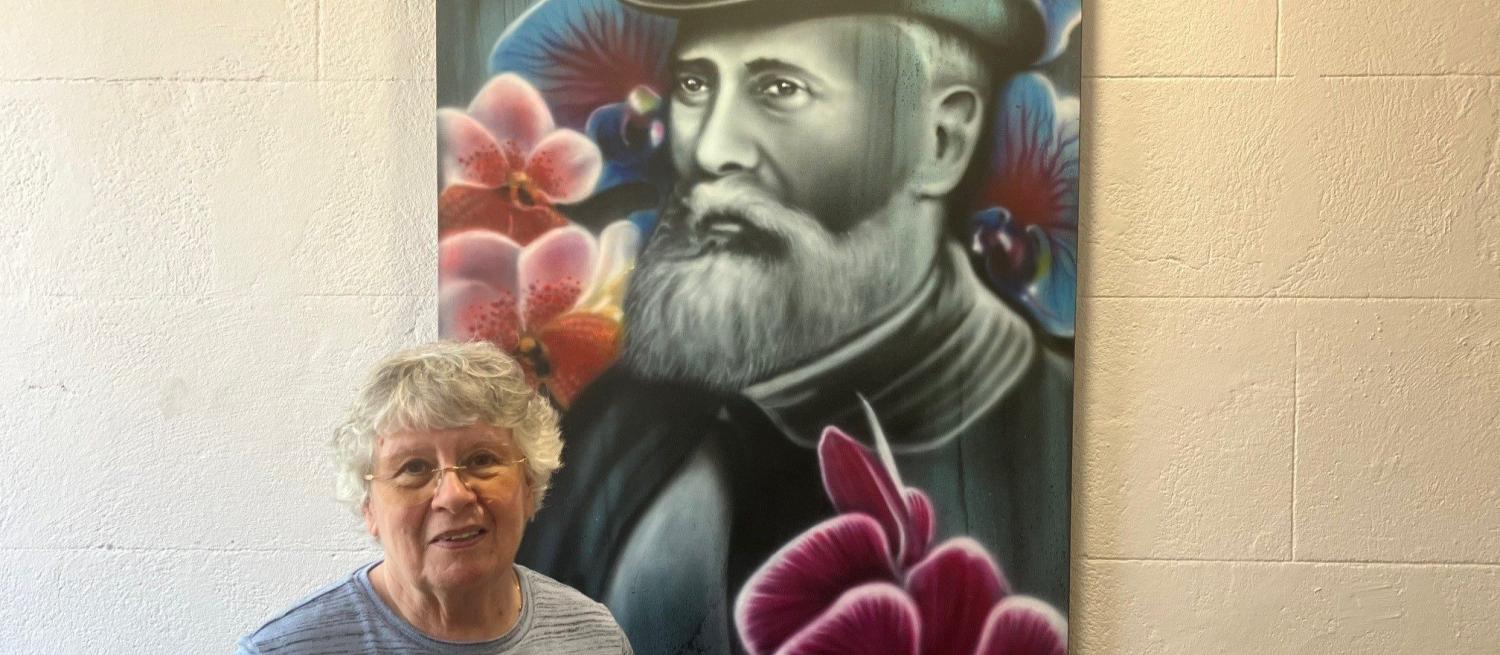
The seeds for this exhibition were sown way back in in 2018 when the museum moved from the Hatfield Road to it’s present position in St Peters Street. The opening exhibition was called First Impressions and it told the history of printing in St Albans. I was involved in researching the small companies in the town, and that is how I came across Frederick Sander.
He was known as ‘The Orchid King’ and I had not heard of him despite studying horticulture at Oaklands College in St Albans. Luckily I had heard of Samuel Ryder, the famous seed merchant, who these days is more well known for the Ryder Cup. This made me wonder why two such prominent growers would choose to have their businesses in St Albans.
The answer was transport links. The town’s nearness to London and its three railway stations. Sander’s even had their own ‘halt’ on the railway line that ran by their nursery.
On researching local nurseries using the Kelly’s Directories in the library, I came across more and more nurseries each with its own unique history. Some were fairly easy to research, others much more tricky. The New Zealand Nursery, run by the Watson family and situated where Loreto is today was the most enigmatic of all. Why did the family call it The New Zealand Nursery? This was revealed eventually when I found John Watson’s obituary in The Herts Advertiser. This stated that Mr Watson had gone to New Zealand in 1854 and again in 1858. He came back to St Albans with many plants and seeds.
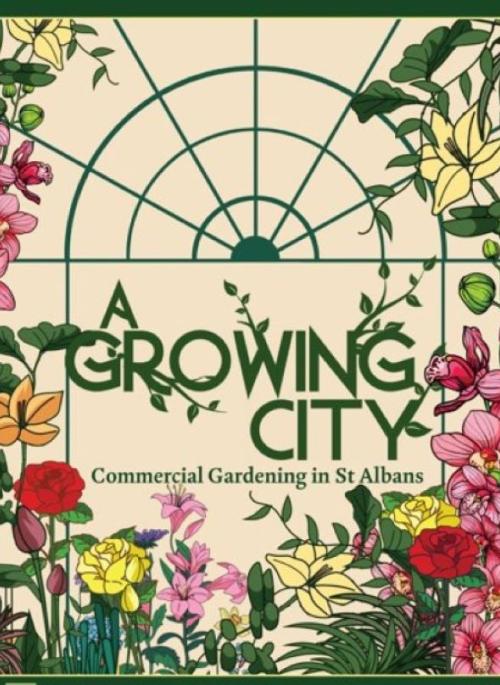
The title of the exhibition ‘A Growing City’ not only refers to the growing of plants in St Albans but also the growth of the city itself. Horticultural businesses were nearly always found on the outskirts of a town. Once the land they used became valuable as building land the nurseries sold up and moved further out. This is shown very well in St Albans. The oldest nurseries were situated in what we would now consider the heart of the city – Romeland and George Street. Later in time nurseries were to be found in the Fleetville area which was eventually also purchased for housing and the nurseries moved out to Smallford. Our modern day nurseries Aylett’s, Burston’s Carpenter’s and Notcutts form a ring around the city.
People love plants both in their homes and in their gardens. According to the H.T.A. (Horticultural Trades Association) sales rose by 9% last year, with 203 million visits to garden centres. The average adult made 3.6 trips over the period, with spending on garden retail at £9 billion.
These statistics show a simple truth, plants make us feel good and keep us in touch with nature and our beautiful, fragile planet.