When Bharatanatyam (Indian classical dance form) met the Museum
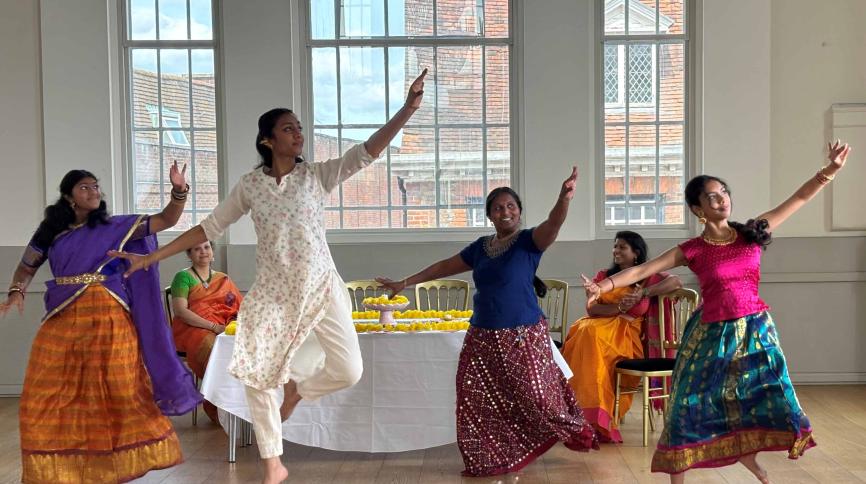
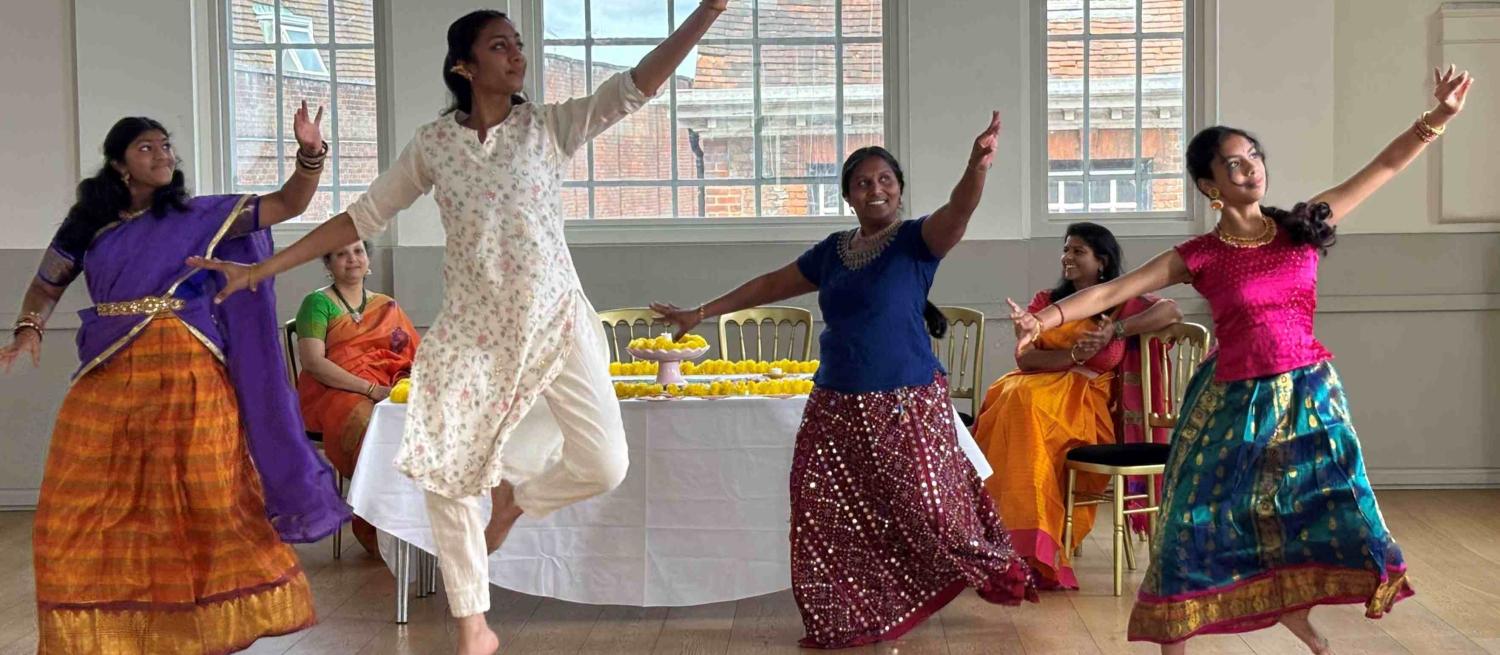
The opening of the Generations: Stories from South Asian St Albans exhibition at St Albans Museum offered a moment where movement, memory, and place came together in a quietly powerful way. Within the galleries, Bharatanatyam became a medium through which stories of heritage and everyday life were shared, allowing the exhibition to extend beyond objects and text into embodied experience.
The group involved in the performance was intentionally mixed, bringing together trained dancers and those with no prior performance background. Bharatanatyam provided a shared structure through rhythm, gesture, and expression, while remaining open enough to hold individual stories.
Bharatanatyam, as well as other Indian classical dance forms, use specific hand gestures called 'Mudras'. These are also prevalent in ancient Yogic practice. A mudra invokes spiritual awakening, heals the human mind and body and helps a dancer emote without spoken words. They played a central role in this dance, shaping meaning through hands, eyes, and stillness. These gestures were not presented as formal symbols alone but as expressions of lived experience, memory, and connection.
Preparation was a thoughtful and reflective process. Questionnaires invited participants to consider their relationship with South Asian identity, movement, and the city of St Albans. These responses informed both the narration and choreography, ensuring the work emerged from personal reflection rather than abstraction. Rehearsals focused on presence and awareness, particularly as participants learned to move within a museum setting that demanded sensitivity and restraint.
Colour and costume brought another layer of meaning to the performance. Traditional Bharatanatyam attire introduced vibrancy into the gallery spaces, with rich fabrics, jewellery, and rhythmic movement creating moments of visual intensity. Against the neutral tones of the museum, the dancers became living extensions of the exhibition, drawing attention to the continuity between heritage and contemporary expression.
While filming took place within the museum, the narration and choreography carried the energy of St Albans market into the performance. References to its buzz, movement, festivities, and everyday encounters were woven into gesture and rhythm. The choreography echoed the pace of lived experiences, the coming together of people, the layering of sound, and the sense of shared space that defines the market. This contrast between the stillness of the gallery and the imagined vitality of the market created a reflective and at times surreal quality.
This work was made possible through the vision and sensitivity of choreographer Meera Vinaya Krishna, with the thoughtful support of assistant choreographer Yukta Chegu. The collaboration and generosity of the St Albans Museum staff enabled the performance to unfold seamlessly within the gallery spaces, while the filming crew captured its nuance with care. Above all, gratitude is owed to all the dancers, both experienced and first-time performers, whose commitment, openness, and joy made the process and the final work a true feast for the senses.