This Educational session is designed for secondary school students, and can be adjusted to suit all years from 7 - 13. It has a maximum capacity of 32 students and is £90 per session. We recommend combining the artefact workshop with a self-guided gallery visit, lunchroom and seeing the ruins in the park. We can offer a timetable for up to 4 classes (120 pupils). We can offer a morning or afternoon timetable, running 10am-1pm or 11-2pm.
What you need to know
Year group: 7 - 13
Group size: Up to 32 per workshop (we can welcome up to 4 groups of 32 that alternate activities)
Cost: £90 per workshop. Our full timetable includes one hour in the gallery (£5 per pupil) and lunchroom (£10 per hour)
Duration: One hour workshop. Full timetable is 3 hours, including one hour workshop, one hour in the gallery, half hour per 32 for lunch, half hour seeing ruins in the park.
What happens in the workshop?
It is an hour-long skills based workshop that examines the history of Verulamium and the structure of Roman society. It asks the students how we know about the past, and challenges them to move beyond the notion of history or archaeology having “correct answers”.
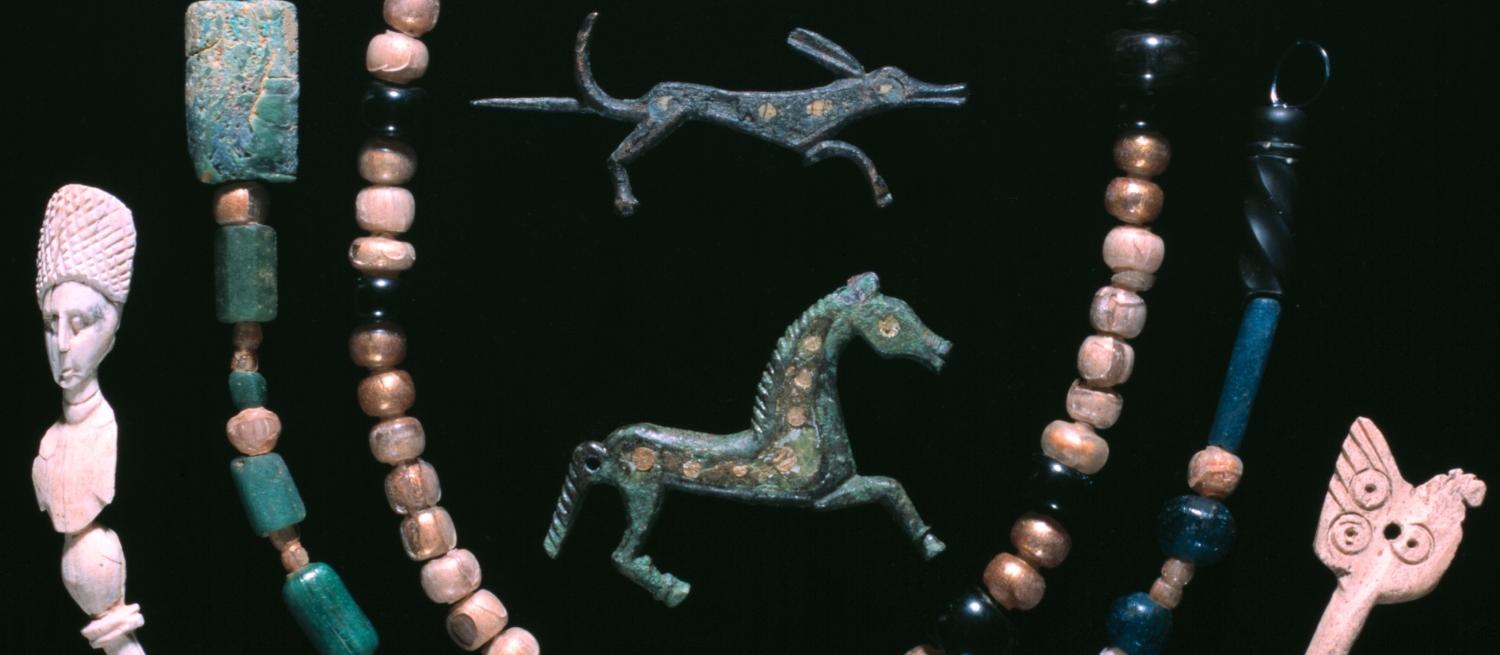
Students are able to handle genuine Roman artefacts, and are tasked with assigning them to one of 4 social groups in the Roman world. They also work out what the objects are used for, made of, how they were made and how far they have travelled to get to Verulamium.
The session is high-energy and engaging. It is designed to make the students think, debate and develop their evaluation skills.
Skills/Learning Objectives:
- Develop students’ source enquiry skills through artefact investigation
- Students will gain an understanding of Roman daily life at Verulamium
- Students will appreciate the way social status impacted daily life
- Students will begin to appreciate the inherent bias in the archaeological record and its impact on historical study
The session meets several of the learning criteria from both the OCR and Eduqas GCSE Latin syllabus.
From Eduqas, our session meets the following syllabus points:
- Demonstrate knowledge of an aspect of Roman civilization
- Analyse and respond to ancient source material
- Evaluate evidence from throughout the topic to respond to an extended evaluation question.
For OCR, our session meets these syllabus points:
- Use a range of ancient sources including literary, inscriptional and archaeological
- Evaluate usefulness of primary sources as evidence through comprehension and comparison, identifying gaps in evidence, distortion for literary effect, or bias
- Select analyse and evaluate evidence to draw an informed conclusion and make a reasoned evidence-based response to the material studied
Gallery activity
We now offer a free digital audio trail for KS3-5 to complete during their gallery time.
Our free KS3–5 audio guide has been designed specifically for secondary school groups to support independent, student-led exploration of the Verulamium galleries. Rather than following a single fixed route, students can choose between different styles of content — including expert curatorial insight, imaginative storytelling inspired by the people of Roman Verulamium, and extracts from a real 1930s excavation diary written by a teenage participant. The guide includes a flexible codeword challenge that helps students stay focused and allows teachers to monitor participation, while still giving students choice in how they explore the collection. Designed to support a range of learning styles and interests, the guide can be used flexibly within your gallery time and alongside your own teaching objectives.
Please bring your own devices to scan a QR code on site, which will take you to the audio tracks. We will provide a map which lists the locations of artefacts mentioned in the tracks. Students can also fill in a code word by listening to the tracks. We provide a teaching resource on booking, and both resource and tracks can be accessed off site and used at school.
We are now taking bookings for academic year 2026-27.
Do you need funding support for your coach costs? Apply now.
Resources:
Year 8 teacher"I thought the workshop was fantastic. The timings were spot on which helped the boys remain engaged. It was great to get some teacher input at the start and the boys enjoyed the dressing up element too! The carousel activity where boys got to handle objects was enjoyable and it was great having the teacher join different groups at various points to ask questions which got the boys thinking even more carefully about what the objects might have been used for. The questioning of students in general was fantastic and at the right level."
Our learning programmes have been awarded the Sandford Award for the quality of heritage learning on offer. In order to receive this award, our learning programmes must meet the following criteria:
- The learning programmes are delivered in a way that engages, informs and inspires visitors
- The learning provision at our sites contributes to an understanding of the local and national heritage
- Our learning programmes have been developed through consultation with customers and learning providers and advisers
- There is attention to good management and administrations during all aspects of the visit
- Learning resources and services are provided which enhance the quality of the learners' visit
- The statutory requirements are met and essential additional policies and strategies are in place.