Here is some information to help you prepare for your visit to Verulamium Museum.
Before you arrive
Opening times and ticket booking
The museum is open daily, 10am-4pm (last entry 3.30pm). We are open all bank holidays except Christmas, Boxing Day and New Years Day.
You can book a ticket on our website, or pay by card or cash at the front desk.
Quiet times
We are usually very busy with schools during term time. The museum is likely to be less busy after 2pm on a weekday. During school holidays, we are also less busy after 2pm.
Bloomberg Connects
Verulamium Museum is on Bloomberg Connects
Enhance your visit with expert insights, behind-the-scenes context, and curated content – all for free. Download the Bloomberg Connects app and search “Verulamium Museum” to plan your visit today.
Getting here
By Car
There is a large car park outside the front of the museum. There are two disabled bays, but if you have a blue badge you can park for free in any of the car park bays for up to three hours. You pay for parking at the ticket machines in front of the public toilets, or by using the Pay by Phone app.
The car park is open Monday to Sunday. From 9:30-6:29pm, the rate is: For up to 3 hours £2.80, for up to 4 hours £5.70, for up to 6 hours £7.50, up to 24 hours £17.50. From 6.30pm to 10pm it is £2. For coaches, it is £31.50 for up to 24 hours only.
By train (and walk/bus/taxi)
The closest station is St Albans Abbey (Abbey Flyer line from Watford Junction), around a 15 minute walk, while St Albans City station (fast trains from London St Pancras) is around 25 minutes, walking along Victoria Street, through the town centre and down through Verulamium Park or through St Michael's Village.
By bus
Multiple bus lines, including the S7, S8, S9 and 302 from Hemel Hempstead or Welwyn Garden City, stop near St Michael's Village, just a 2-3 minute walk from the museum.
Planning to visit?
Are you planning to visit us? Announce your visit by clicking the button below and giving us some details about what resources you might require to support your visit with us.
Welcome to the museum
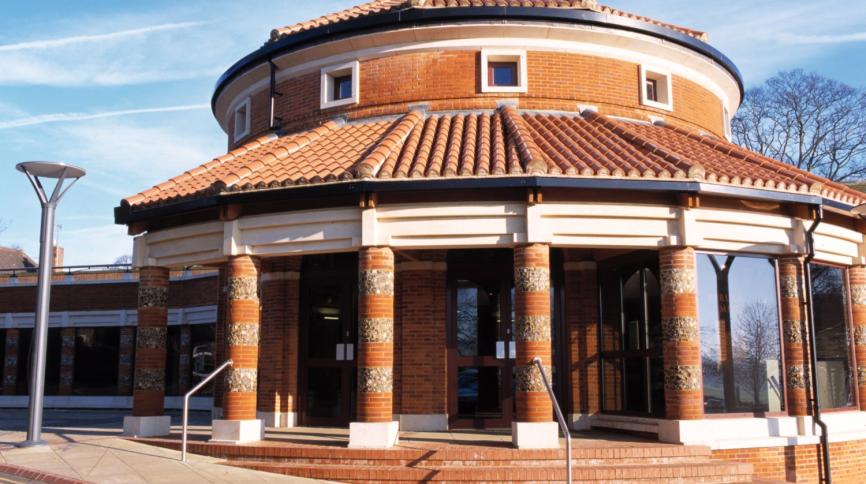
There are steps and a ramp to the entrance, and the doors open by hand or are automated and open towards you.
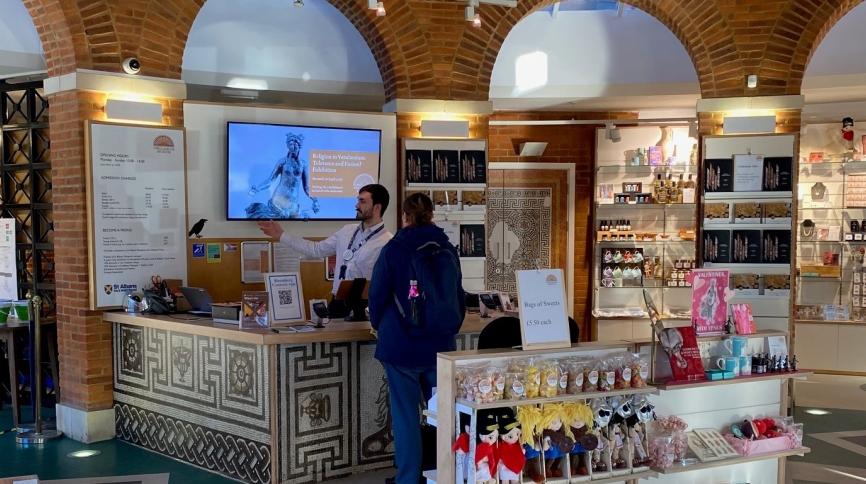
On entering the museum, you will be greeted by a member of our Visitor Services team. There is an admission charge for entering the museum. This is listed to the left of the desk, on a poster between the two sets of double doors outside and on our website. Carers or personal assistants can accompany someone for free.
We have ear defenders, portable seating and sensory backpacks available if you'd like to use them during your visit.
Also in this entrance area is our museum shop. You are welcome to take a look around here at the start of your visit but you will also exit the museum the same way so you will have another chance to look around. There is a seating area in the shop.
Once you have bought your ticket, you enter the museum along the colonnade (a long corridor with windows down one side).
Toilets and calm space
Visitor toilets and a calm space are located in the basement of the museum, this can be reached by the stairs (on your right as you enter the museum) or a lift (behind the welcome desk, to the right).
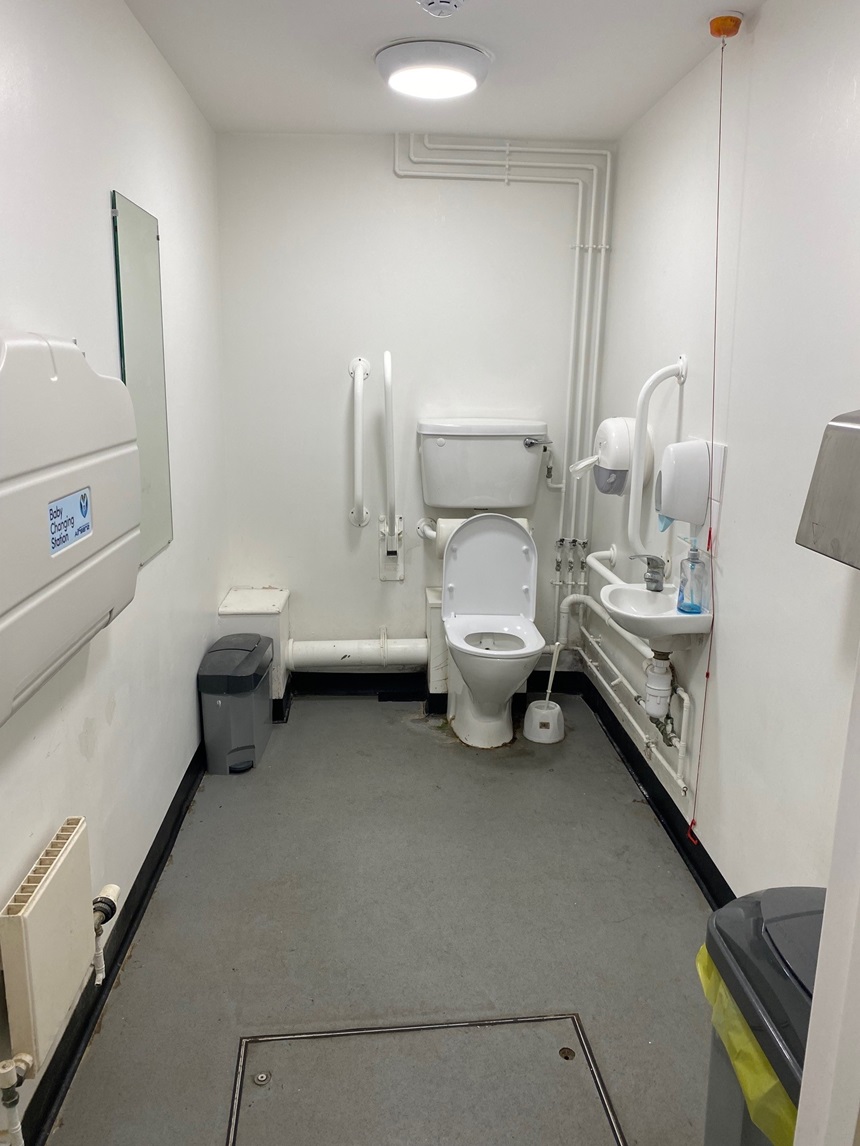
If coming down the stairs you will walk into the cloakroom first, if coming by the lift you will enter facing the accessible toilet.
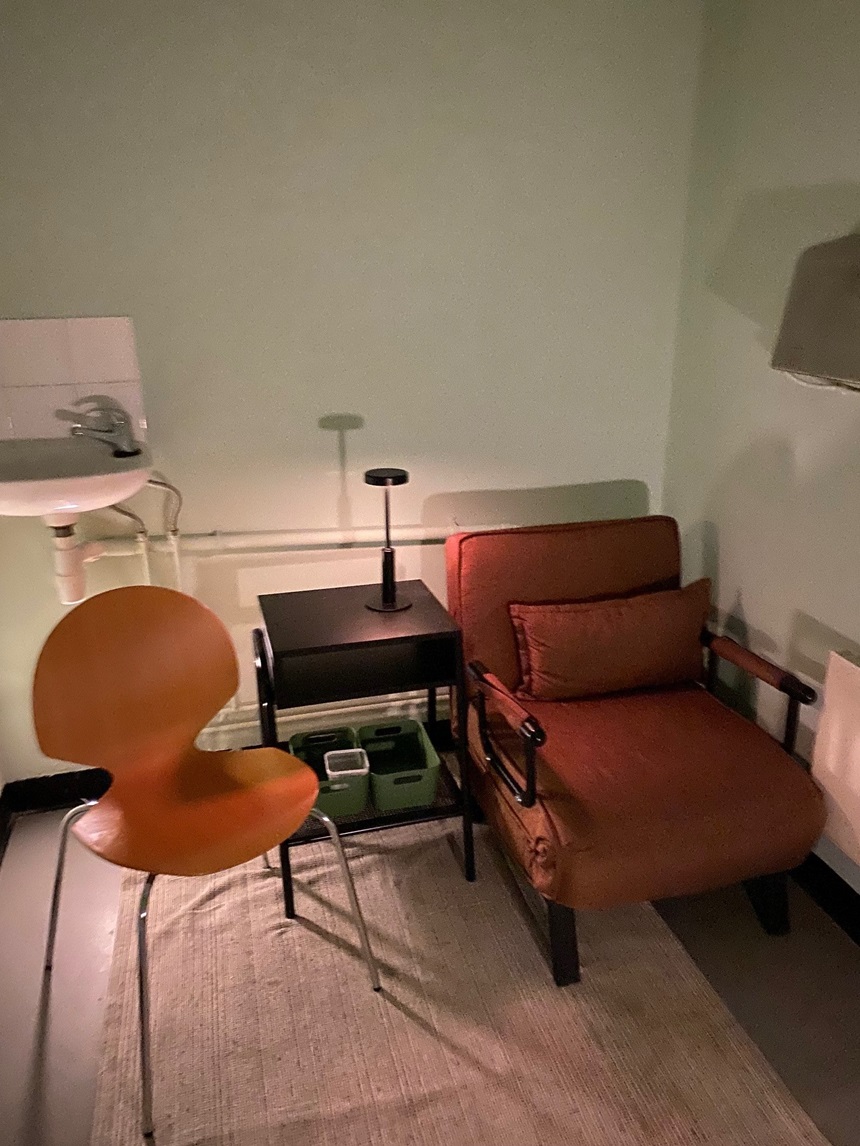
This cloakroom is used by schools. There are multiple cubicles and one accessible toilet (with baby changing facilities) and a Calm Zone that can be used for as a private space. At the end of the corridor is the lunchroom, used by schools.
To the gallery
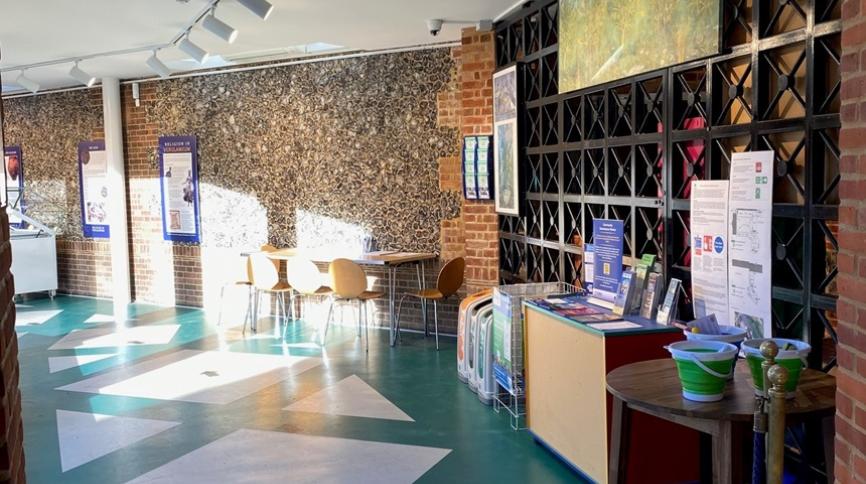
Go to the left of the front desk and go down the corridor (called the colonnade.) There is often an exhibition in this space.
There is a table here for colouring in. There are explorer buckets on the table to your right for younger visitors to borrow. These have magnifying glasses, a finger puppet, timers, and dice for you to use in the gallery.
The door to the gallery is at the end of this corridor, on the right-hand side.
The green gallery
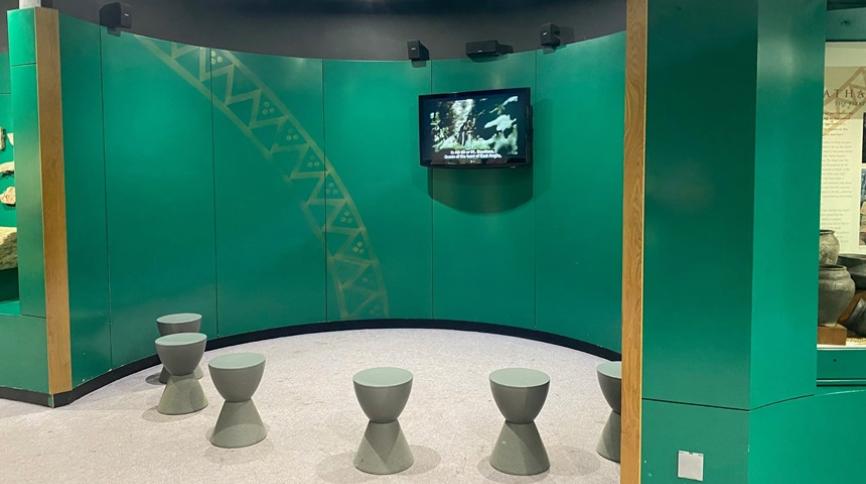
Learn about the Celtic tribe who lived here before (and during) the Roman conquest.
You can sit and watch a short video, which tells you all about the history of Verulamium, including footage from the archaeological excavations in the 1930s. The video is around 9 mins long and there are stools to sit on.
The central area
From here you can choose which area you want to visit first – look for the red names above the doorways.
There is no set order to visit, go to which area interests you the most first!
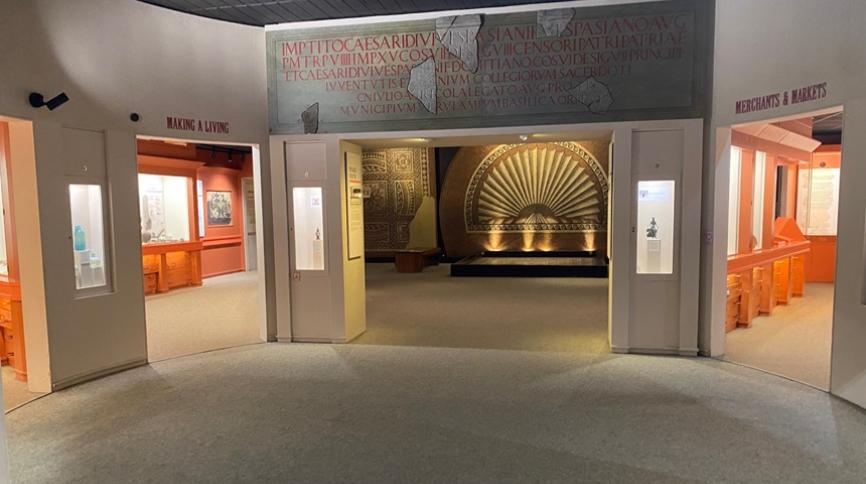
Death & Burial
Learn about what skeletons and burial rites can tell us about the past. There is a film (6 minutes long) where an actor tells the story of a skeleton that archaeologists have discovered.
Trigger warning - There are three adult skeletons and two baby skeletons in this area. (This area is well-labelled and can be missed out.)
There is an entrance to the next section ‘At Home in Verulamium.’
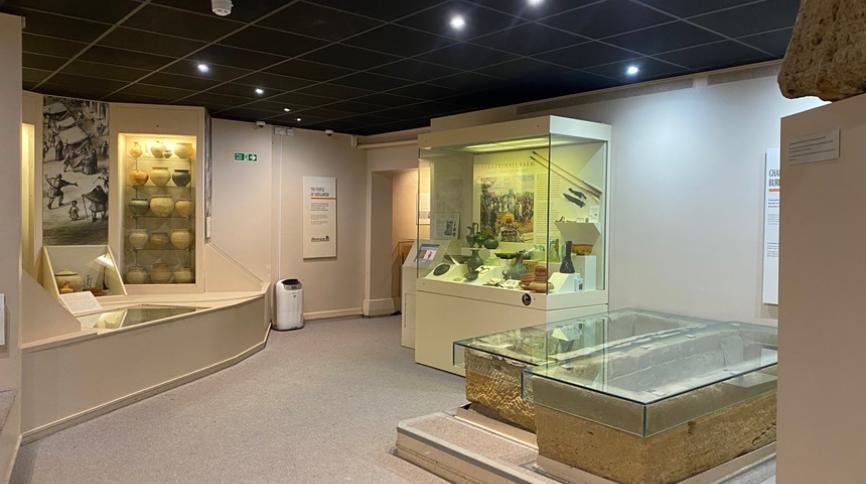
Food & Farming
Learn about what food the Romans ate and how they farmed. You can open some of the drawers in this area.
Trigger warning - There are several animal skulls in this area, including those of dogs and cats.
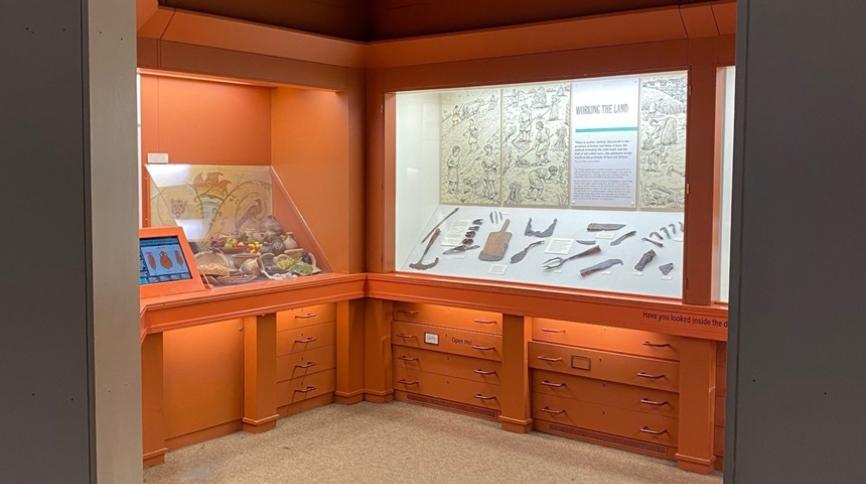
Making a Living
Here you can learn about different jobs in Roman Britain and learn how to build an arch with large foam blocks. You can open some of the drawers in this area.
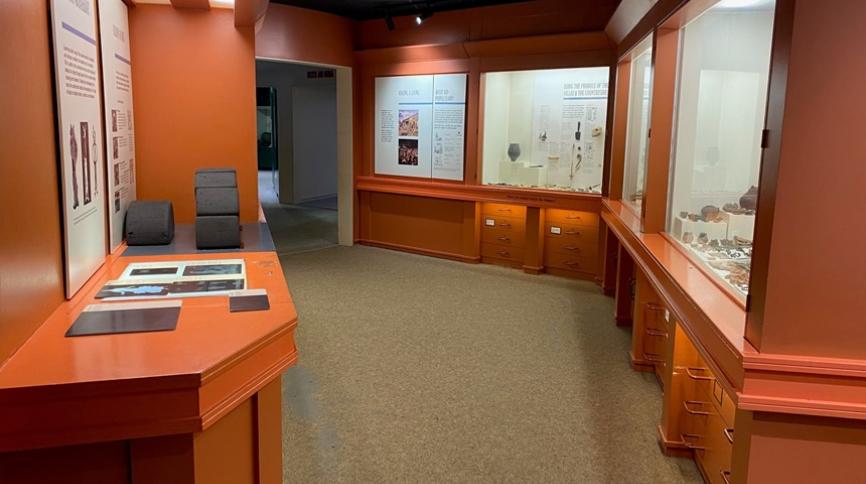
Rites & Recreation
Learn about how the Romans relaxed and had fun. In this room there are 3 buttons you can press to hear stories, and you can play a Roman boardgame. You can open some of the drawers in this area.
Trigger warning - There is an animal skull in this area.
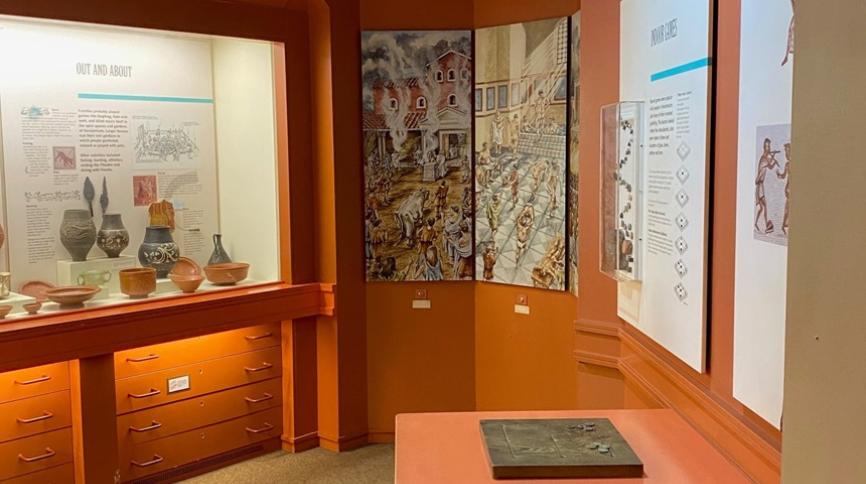
Merchants & Markets
Learn about the size of the Roman Empire and trade. There is an interactive touch screen (no sound.) You can also use a microscope to look closer at some coins. You can open some of the drawers in this area.
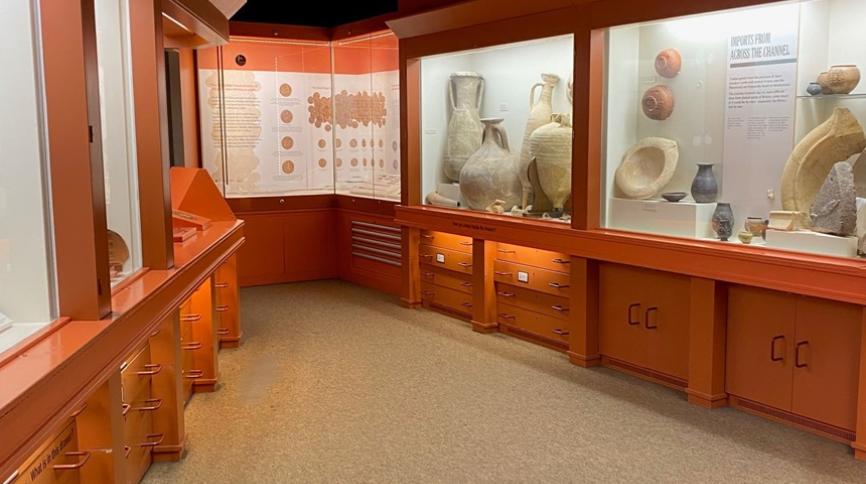
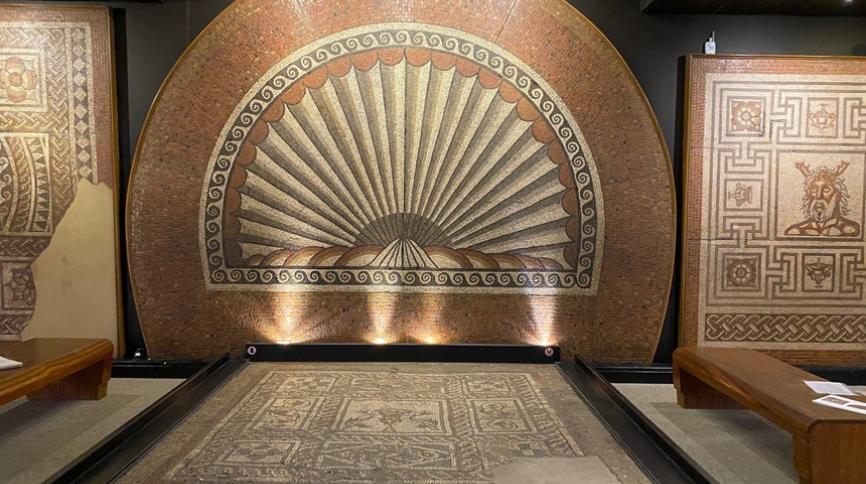
Mosaics
There are 4 large mosaics, these are all real and nearly 2,000 years old. There are benches you can sit on. There are two booklets which give you more information on the mosaics and the excavations.
We often have a handling table, dressing up, mosaic table and sometimes a large puzzle here, outside of term time and at weekends.
Turn left, to enter ‘At Home in Verulamium’, or right to exit and enter the gift shop.
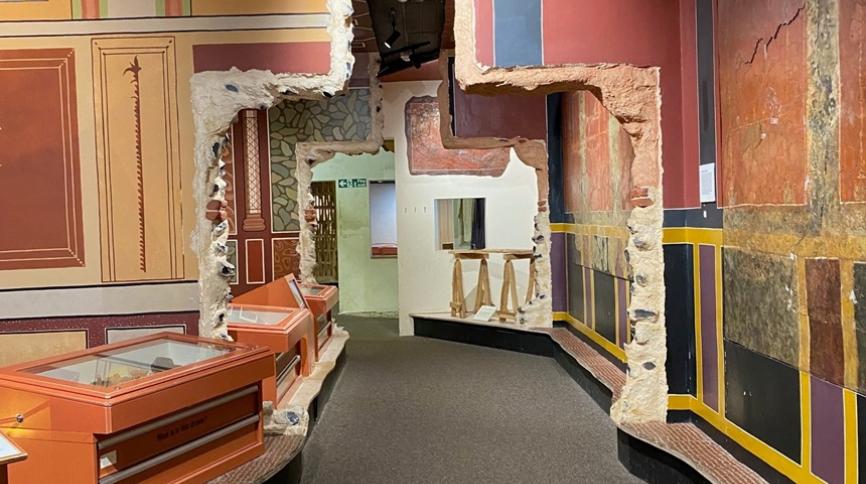
At Home in Verulamium
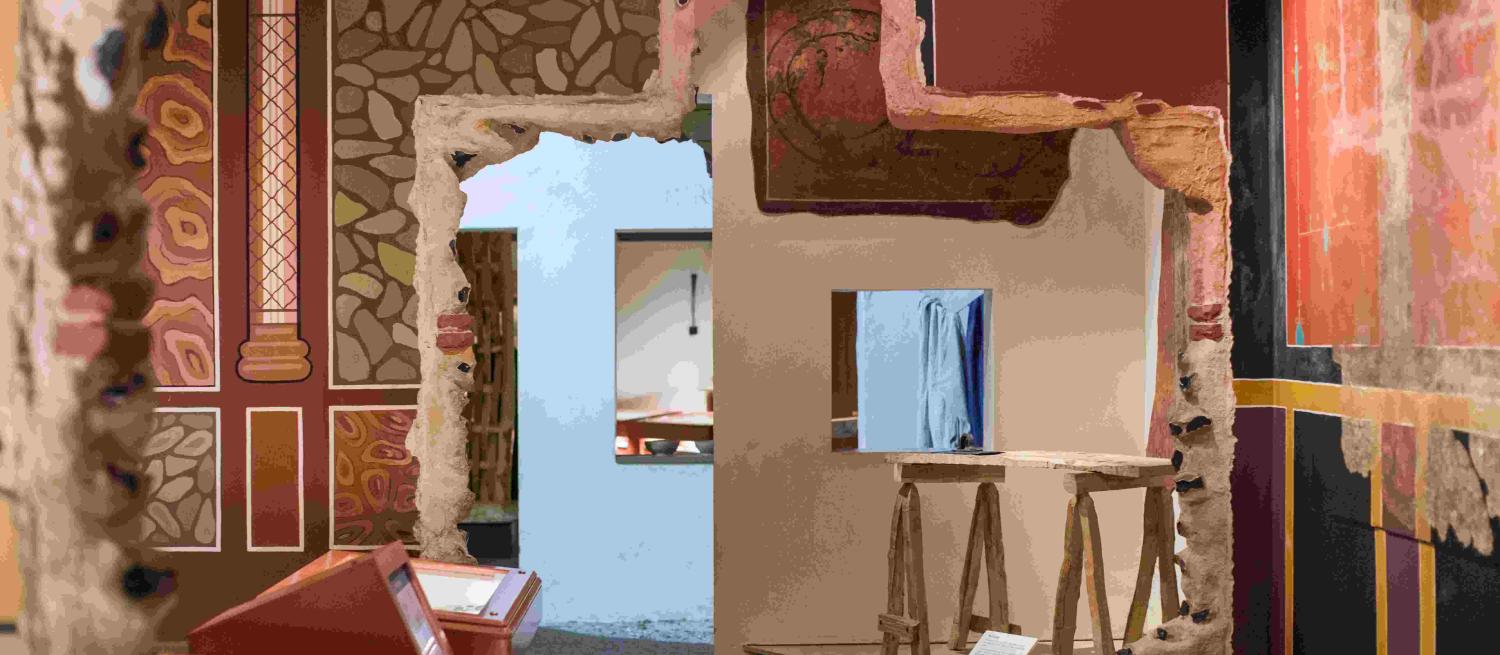
Here you will see how different people lived in Verulamium. On your left, you will see a mannequin working at a desk by a dog. On your right, you will see the Lion and Stag mosaic and Roman wall paintings.
You can open drawers in this area.
Trigger warning - There is a dog skeleton in the bottom drawer in the second cabinet along.
Further along, you will see more mannequins and learn about Roman beauty, fashion, shrines, woodworking and cooking in a Roman kitchen. At the end of the corridor, you will reach 'Death & Burial' on the left.
Resources to support your visit
We have a number of resources available to support your visit. These include:
- A hearing loop at our welcome desk
- Ear defenders (for children and adults)
- Wheelchair available to borrow
- Subtitles on all films and large print transcripts
- Lift to access our basement level (where the toilets, cloakroom and school lunchroom are located)
- Step-free access around the museum galleries
- Seating within the gallery
- Portable seating to carry around the gallery
- A calm space, separate from the gallery area, for visitors experiencing sensory overload or who need a private space
- Sensory backpacks
You can also take a virtual tour of the inside of the museum. (The shop has been updated since, but the museum layout is the same.)
You can print our visual story, full of extra detail and images, ahead of your visit.